
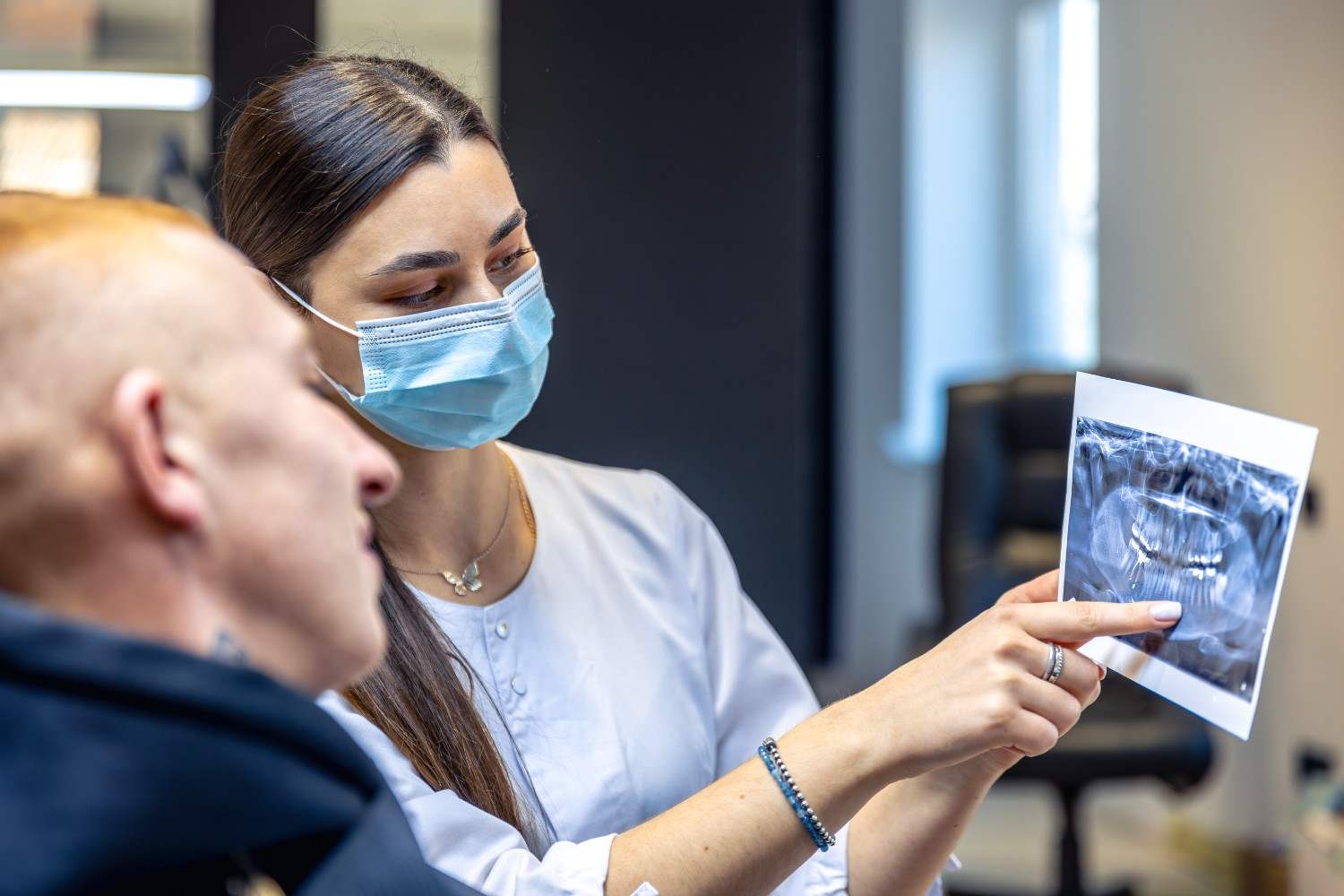
A dental examination may not reveal every concern affecting the teeth, gums, or jaw. X-rays help dentists see these hidden areas and check for problems that need attention. The main difference between intraoral and extraoral X-rays is where the image is taken from. Intraoral X-rays use a small sensor placed inside the mouth to capture detailed images of individual teeth. Extraoral X-rays are taken from outside the mouth and show a wider view of the teeth and jaw. Both types of dental X-rays in NW Calgary provide useful information for diagnosis and treatment planning.
If you need dental X-rays, the type of X-ray will depend on your symptoms, dental history, and what your dentist needs to check. Knowing about the different types of X-rays can help you feel more comfortable and prepared for your visit.
What Are Intraoral Dental X-Rays?
Intraoral X-rays are taken with a small sensor or film placed inside the mouth. They provide clear, detailed images of individual teeth and the surrounding bone.
These images help identify problems that may not be visible during a regular dental checkup.
Common types of X-rays taken inside the mouth include:
- Bitewing X-ray: Shows the top and bottom teeth together. It helps find cavities between teeth and check the bone around them.
- Periapical X-ray: Shows the whole tooth, from the top to the root. It helps the dentist find infections, root problems, and changes in the nearby bone.
- Occlusal X-ray: Shows a larger section of the upper or lower jaw. It may help locate extra teeth, objects, or other changes in the mouth.
What Are Extraoral Dental X-Rays?
Extraoral X-rays capture images from outside the mouth. The equipment moves around the head or takes a wider image without placing a sensor inside the mouth.
These images show larger areas of the teeth, jaw, and nearby structures. They are useful when a dentist needs to examine the position of several teeth or assess jaw concerns.
Common types include:
- Panoramic X-ray: Captures a broad view of the upper and lower teeth, both jaws, and nearby areas. It can help assess wisdom teeth, jaw problems, and tooth development.
- Cephalometric X-ray: Shows the side of the head and jaw. It is often used when planning orthodontic treatment.
- Cone beam CT scan: Creates detailed 3D images of the teeth, jaw, and surrounding structures. It may be used for complex treatment planning, such as dental implants, when needed.
Intraoral vs Extraoral X-Rays: Key Differences
Both types help assess oral health, but they serve different purposes.
Intraoral X-rays:
- Taken with a sensor inside the mouth.
- Show individual teeth and nearby bone in greater detail.
- Help detect cavities, infections, and root problems.
- Commonly used during routine dental examinations.
Extraoral X-rays:
- Taken with equipment outside the mouth.
- Show wider areas of the teeth and jaw.
- Help assess tooth position, jaw structure, and developing teeth.
- Often used for orthodontic planning and broader assessments.
A dentist near you can explain which image is suitable for the concern being checked.
Which X-Ray Do You Need?
The right choice depends on the reason for the examination. Not every patient needs every type of dental X-ray.
For example:
- Tooth pain or possible infection: A periapical X-ray helps the dentist assess the tooth roots and the surrounding bone.
- Cavities between teeth: A bitewing X-ray helps detect cavities that are hard to see during a regular checkup.
- Wisdom tooth assessment: A panoramic X-ray may show the position of the wisdom teeth.
- Braces planning: A panoramic or cephalometric image may be recommended.
- Dental implant planning: A cone beam CT scan may be needed to assess the jaw and available bone.
If you are unsure which X-ray you need, discuss your symptoms and dental history during your appointment. A dentist in NW Calgary can recommend imaging based on your individual needs.
Are Dental X-Rays Safe?
Dental X-rays use a small amount of radiation to take pictures of your teeth. They are usually safe when taken only when needed. Dentists follow safety rules to use as little radiation as possible and provide protection when needed.
The type and number of X-rays depend on your age, dental health, symptoms, and past dental visits. Tell your dentist if you are pregnant or think you may be pregnant. They can decide if the X-rays are needed or should be delayed.
When Are Dental X-Rays Needed?
Dental X-rays in Calgary may be recommended when there is a concern that cannot be fully checked during a visual examination. They can help detect:
- Cavities between teeth.
- Infection around tooth roots.
- Bone loss linked to gum disease.
- Impacted or unerupted teeth.
- Changes in the jaw.
- Problems beneath existing fillings or crowns.
Dental X-rays near you can support accurate diagnosis, but they are not needed at every visit. The dentist should consider your dental history and current concerns before recommending them.
Understand Your Dental Health with the Right X-Ray!
A closer look at your teeth and jaw can reveal problems that may not be easy to spot during a regular checkup. The right dental images help identify concerns early and give a clearer picture of what care may be needed. If you have tooth pain or need an assessment before starting treatment, schedule a visit at a Beddington Dental Clinic to discuss your concerns. A dental examination can help determine whether an X-ray is needed and which type is suitable for your needs.
FAQs
Do intraoral X-rays show more details than panoramic X-rays?
Yes. Intraoral X-rays show clearer details of individual teeth and the nearby bone. Panoramic X-rays show a wider view of the mouth but may not show small details as clearly.
Can a panoramic X-ray detect cavities?
It may show some larger areas of decay, but it is not the preferred image for finding small cavities between teeth. Bitewing X-rays are generally more useful for this purpose.
How often should dental X-rays be taken?
There is no fixed schedule for everyone. The timing depends on your dental health, risk of decay, symptoms, and previous X-ray results.
Do dental X-rays hurt?
No. Taking an X-ray is generally painless. An intraoral sensor may feel slightly uncomfortable when placed inside the mouth, but the process is usually quick.